Catch the battery before the smoke.

Detects packs going bad pre-smoke. Auto-cuts power. Aligned to FDNY Fire Code §309.3 and Local Law 39.

59% of 2023 NYC lithium-ion fires happened while batteries weren't charging.FDNY 2023 lithium-ion battery fire incident data.

Our wall sensor watches your charging room around the clock for heat and off-gas, picks up a pack going bad well before there's smoke, and cuts the charging power on its own. No app, no phone tree, no waiting for someone to wake up. Quietly, every night, the way the sprinkler in your hallway watches — except it sees the precursor, not the flame.

Pilot a building → $299/mo · sensors, software, and remote onboarding support included. On-site install available, ask sales. Walk away in the first 90 days, no penalty.

Carrier or national portfolio? Talk to enterprise →

Thermal · charging room B Live
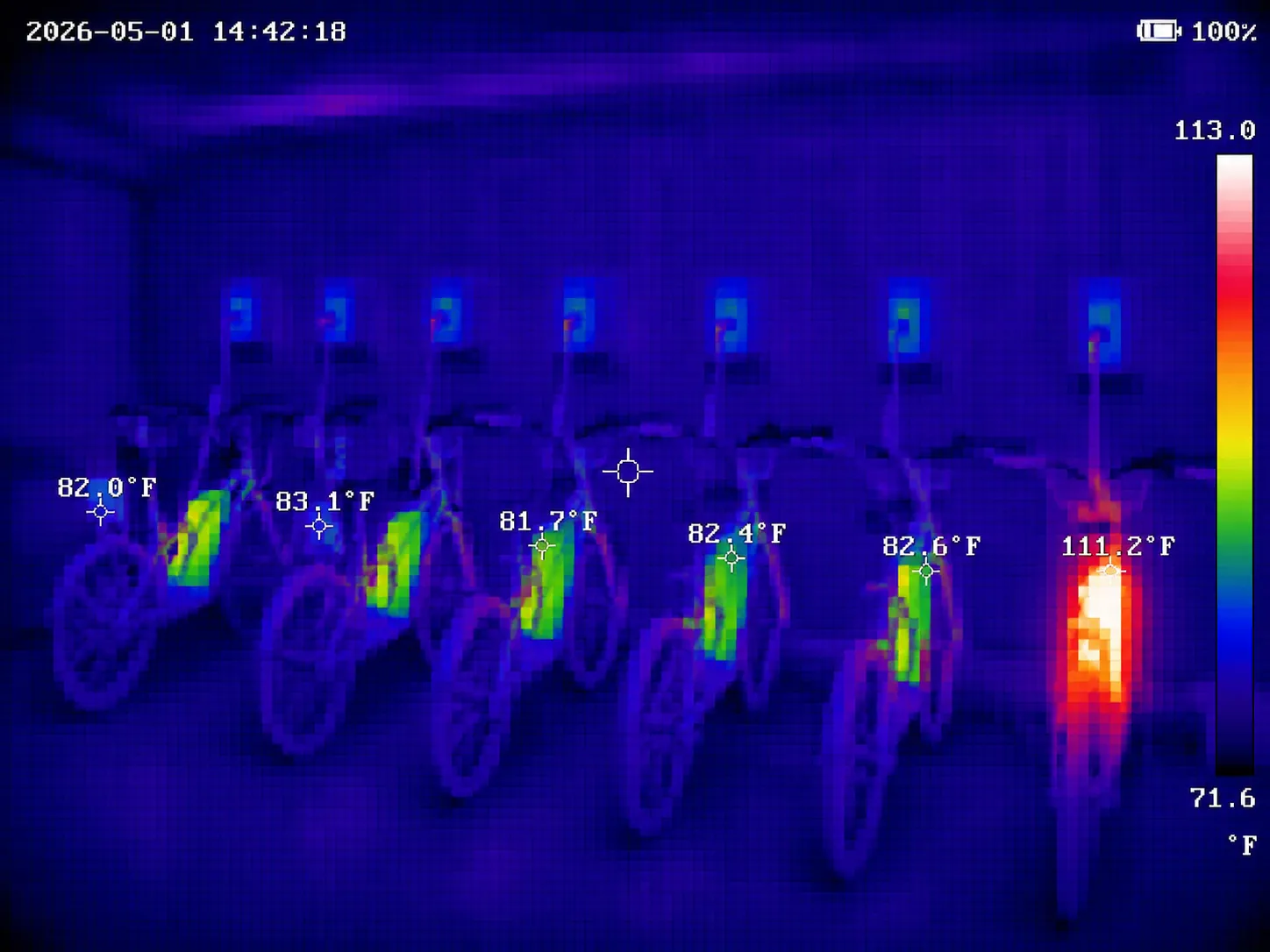
Thermal camera view of a charging room: a row of e-bikes on a rack with one pack glowing hot at 111°F while the others sit near 82°F.
Array 32 × 24 Max 111°F · Zone B Charging power · cut K-0341

One pack overheating; charging power already cut. See the operator console →

BACnet/IP* Modbus TCP* REST API* MQTT* Home Assistant* * In development; ask sales for current readiness.
01 · it sees it early
Heat and off-gas, 24/7.
A venting battery shows up on Kamenet roughly 90 seconds before there's a flame, and the slow heat-up that leads there shows up long before that. Smoke detectors only speak up once it's already burning.
02 · it cuts the power
Trips the charging circuit by itself.
When a pack crosses the line, Kamenet kills the charging power in about a second. No app, no phone call, no waiting for someone to wake up.
The alarm logic runs on the device, offline. No AI is involved in pulling the trigger.
03 · it keeps the record
The FDNY binder writes itself.
Every reading and every action lands in a tamper-proof log, so the monitoring record §309.3 requires you to keep is just there, current, exportable. Hand it to an inspector on the spot, no clipboard.
the problem

NYC's lithium-battery fire count hit a new record — and is rising again.

Almost all of them started in a charging room, overnight. The physics is consistent: a cell overheats, vents flammable gas, and catches within a minute or two of venting. Sprinklers can't stop a gas fire in a sealed room. Smoke detectors only react once it's already burning.

And the FDNY still wants to see the record. §309.3 asks for a designated room, posted procedures, active monitoring, and the documentation that proves all three stayed in place. §608 keeps the hazard-mitigation obligation active; Local Law 39 of 2023 pushes certified batteries (UL 2849 / 2272 / 2271); the FDNY E-Micromobility FAQ (June 2025) is the operational checklist for the indoor room and Buildings Bulletin 2025-009 sets the standard of care for thermal and gas monitoring inspectors lean on. The inspector doesn't wait for a fire to show up. "We have cameras" isn't a paper trail. A binder filled in the night before the inspection is worse than nothing.

This comes out of the compliance budget, not the safety wishlist. It's the same line item as the monitored fire-alarm contract and the sprinkler inspection, things every building already pays for without a meeting.

277
lithium-battery firesNYC · most recent full year · a new record · 9× in five years
+53%
structural firesNYC · year-to-date vs same period prior year · trend reversing
−67%
fatalities, year over yearoutdoor charging push working where it lands
$5k+
minimum charging-room fineper occurrence · stacks per inspection

Sources: FDNY Mayor's Management Report FY2024; FDNY Commissioner update, March 14, 2025.

the product

A sensor on the wall. A console on your phone. A binder for the inspector.

01 / 03the room
Room map · charging room B nominal watch critical
ONE SENSOR · WHOLE ROOM KAMENET · K-0341 B-3 ZONE A · 26.4°C · NOMINAL ZONE B · 38.4°C · ▲ CRIT

One sensor on the wall covers the whole room. At install, the charging slots get grouped into zones, and the sensor reads each zone against its own learned baseline, so a hot zone means "these packs are running hotter than they should," localized to one or two zones. Which exact charger is the part you label: Kamenet points at the region, and you and the room layout do the rest. (Schematic. In the live console this is a photo of your actual room with the zones drawn on it.)

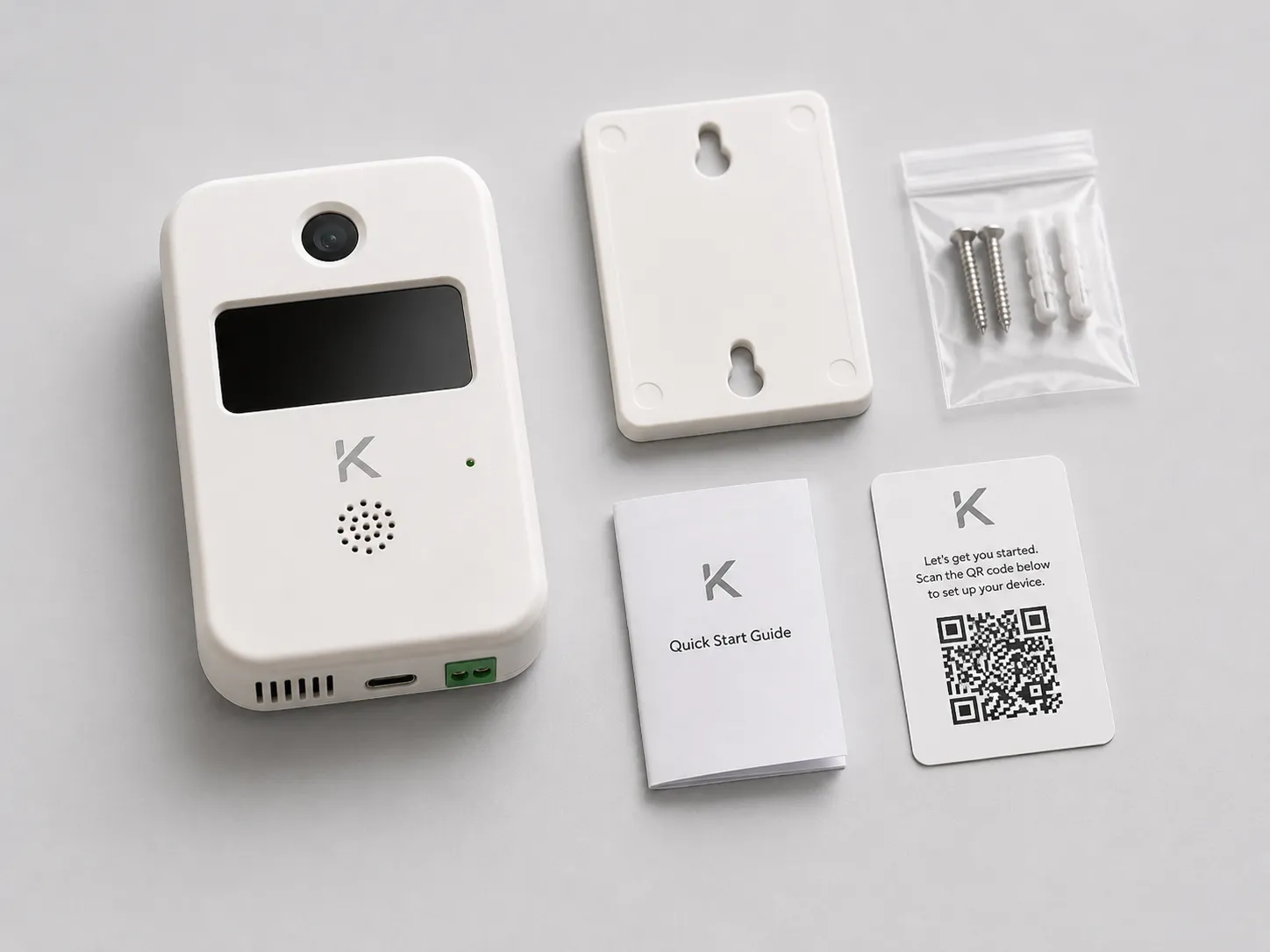
The Kamenet kit laid out on a bench: the wall sensor, a mounting bracket, four screws, a quick-start guide, and the inspector QR card.
What ships for one charging room: the sensor, a wall bracket, the screws, a quick-start guide, and the inspector QR card.
02 / 03what mounts on the wall

The sensor is a heat-and-gas array, 32×24 pixels, sharp enough to pin the bad battery, too coarse to make out a person. It mounts in a charging room a camera would never clear privacy review. The gas channel runs Kamenet's own model, trained on real battery-vent signatures and tuned to shrug off cleaning solvents, exhaust, and cooking. It baselines your room over the first two weeks, so the longer it's there the sharper it gets at telling a real off-gas from a cleaning crew with solvent. We hang it and group the zones on site — nothing for you to wire or configure.

03 / 03the console

This is the real operator console. Four buildings under one manager. Most nights, all you'd see is the binder updating itself in the background. Tonight: one alarm in charging room B at 11:14 PM, power already cut, room safe. From here the console drafts the §309.3 notice and you approve it with a tap.

console.kamenet.co · operator · m.diaz@example-property.co · DEMO
v0.9.2
Operator
Portfolio4
Incidents1
Audit log184
Devices11
Compliance
FDNY exports12
Insurance
Incidents / Open

1 incident awaiting your approval

▲ CRIT · +18.7°C
BuildingRoomSensorPeak ΔStateTriggered
419 WRoom BK-0341+18.7°CCRIT23:14:02
8th AveRoom AK-0218+4.1°CWATCH22:48:11
E 14thRoom CK-0102+0.4°CNOM 
E 14thRoom DK-0104+0.2°CNOM 
AtlanticRoom AK-0091+0.2°CNOM 
5 of 11 sensors shown✓ record verified · chain head 7f3a…2b91
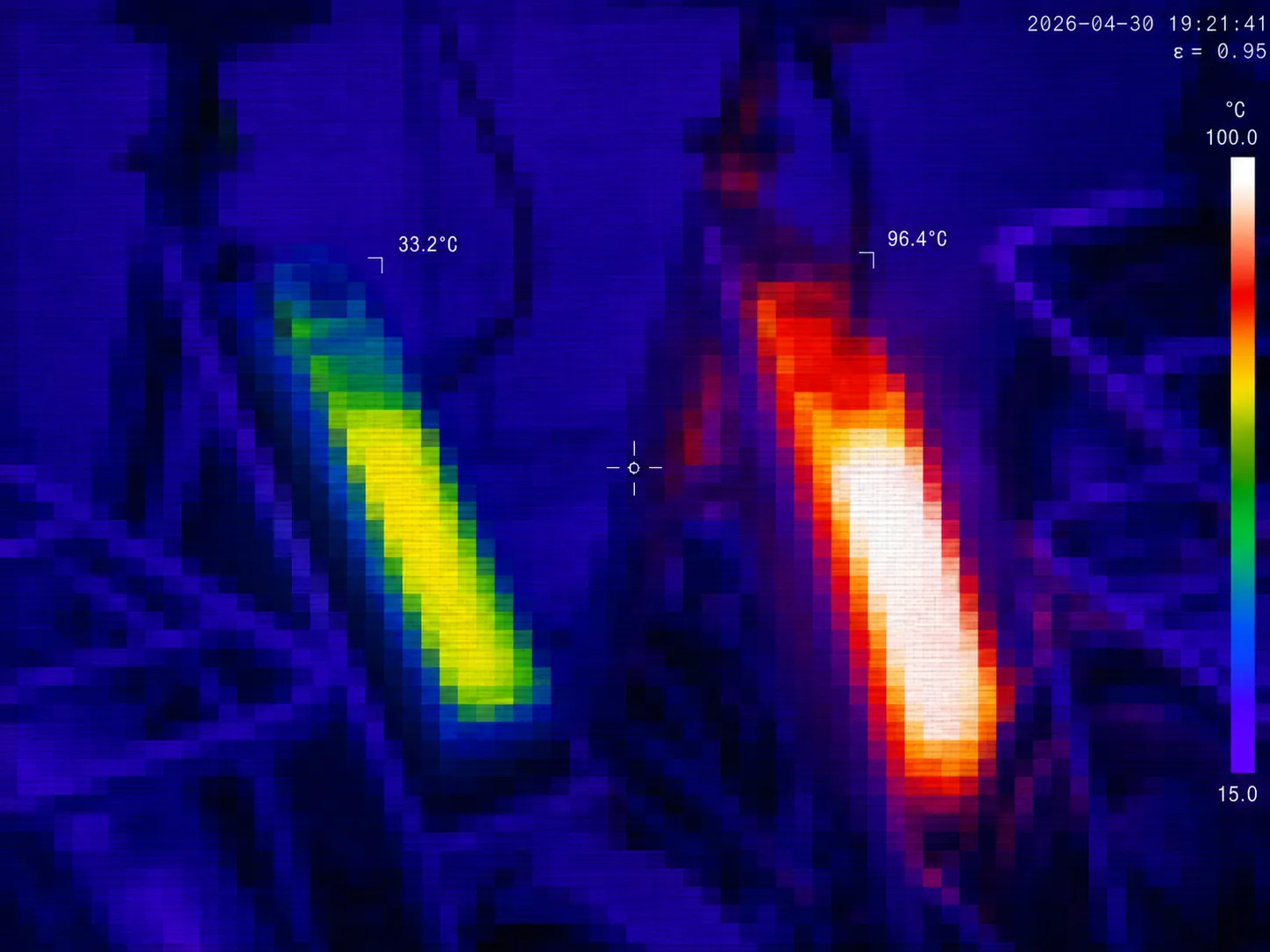
K-0341 · zone B-3PEAK 96.4°C
Thermal still from sensor K-0341: two e-bikes on a rack, one battery glowing hot at 96.4°C against the other near 33.2°C.
baseline 25.6°C ± 0.8
off-gas 3.1× normal
how it works

Four steps. The first three run on their own. The last one waits for you.

The sensor is dumb on purpose. A fixed rule on the device, not the AI, decides whether to alarm. Sustained heat rise over the limit, or tampering, cuts the charging power a second later. Nothing online needs to be working for that to happen.

Off-gas on its own raises a WATCH, not an alarm. It shows on your screen, but nobody gets summoned and nothing gets drafted. A cleaning crew with a strong solvent shouldn't be able to call the FDNY. The WATCH tier and the trained gas model are how Kamenet keeps the early signal without crying wolf.

The record builds itself the whole time: every reading, every action, every approval, timestamped and signed, in an order nobody can quietly rewrite. That's your §309.3 monitoring binder, current and exportable, ready for the inspector who's coming this quarter.

And if something does happen, the AI drafts every notice you're on the hook for. You approve with a tap, or reject and edit, from the console. It doesn't send anything on its own.

01
Sensor catches a sustained anomaly
Heat + off-gas + tamper, all at once. Gas alone → WATCH. Alarm = a fixed on-device rule, no AI.
auto
02
Charging power cut at the relay
About a second after the rule fires. No agent, no human, no app required.
auto
03
Your §309.3 binder updates itself
Every reading, every WATCH, every alarm, every action lands in a tamper-proof log, timestamped and signed. Hand it to the inspector on the spot, no clipboard.
auto
04
If something does happen, the paperwork drafts itself
FDNY notice, carrier claim, vendor work order, tenant text. Each from a lawyer-reviewed template, sitting in your queue until you tap send. You're never approving paperwork the AI wrote without reading it.
your call
two clocks

Two clocks are running. Only one needs a fire to start.

There's the minutes-to-hours of thermal rise before anything is visible, and the quarterly cadence of inspections, renewals, FDNY §309.3, §608, Local Law 39 of 2023, the FDNY E-Micromobility FAQ, and Bulletin 2025-009 questions that doesn't wait for a fire to show up. Most buildings cover the first with a clipboard and the second with a binder filled in the night before.

Clock one · physical, short

A cell heats, vents, then catches — in that order.

A cell heats for minutes to hours, then vents H₂, CO and VOCs in a recognizable signature, then flame follows within ~60–90 seconds. Sprinklers don't help — the pack vents flammable gas in a closed room. Smoke detectors fire after the fact. Cameras don't see heat.

the alarm window
~60–90 s
Vent to visible flame.
Preceded by minutes to hours of detectable thermal rise and off-gas. The window Kamenet works in.
NYC · most recent full year · a new record
277
Lithium-battery fires.
Fatalities down two-thirds year over year — outdoor charging push working where it lands. Structural fires running ahead of the prior year-to-date; trend reversing. Sources: FDNY MMR FY2024 + Commissioner update, March 14, 2025.
Clock two · regulatory, ongoing

The inspector and the carrier don't wait for a fire to ask.

NYC's Fire Code §309.3 (enacted as Local Law 47 of 2022) and §608 turn the charging room into a regulated hazard-mitigation space: dedicated, fire-rated, sprinklered, smoke-detected and temperature-controlled. Local Law 39 of 2023 adds the battery-certification thread (UL 2849 / 2272 / 2271); Local Law 42 of 2023 bans reconditioned packs; the FDNY E-Micromobility FAQ (June 2025) is the operational checklist for the indoor room and Buildings Bulletin 2025-009 sets the outdoor-cabinet standard of care inspectors lean on. In parallel, DOB Rule 3616-07 and 1 RCNY 101-19 both took force October 26, 2025 for stationary energy storage installations, not as the charging-room wedge's binding regulation. An inspector can ask you to show the room is monitored and stayed that way, on any routine visit. So can the carrier at renewal. A binder filled in the night before is worth less than no binder at all.

regulatory exposure
$5k+
FC §309.3 minimum violation, per occurrence.
Cumulative. Stacks per inspection across the same building.
what §309.3 asks for
4
Things the inspector wants on paper.
Designated room. Posted procedures. Active monitoring. Documentation proving all three stayed in place.
NYC Fire Code (2022) · §309.3.3 — Battery Charging Areas read the section ↗
"…where six or more trucks, items of industrial equipment or devices using a storage battery are being charged at a single indoor location, is dedicated for battery charging and secured from unauthorized entry; separated by a fire barrier which encloses the entire space with a minimum one-hour fire-resistance rating; and protected by a fire sprinkler system and one or more smoke detectors or smoke alarms. If the building or occupancy is equipped with a fire alarm system, the smoke detector shall be connected to such system. If the ambient temperature of the room during battery charging operations exceeds the limitations set forth in the manufacturer's instructions or the equipment listing, the room or area shall be temperature controlled to prevent over-heating or other unsafe battery condition; and is provided with a portable fire extinguisher complying with the requirements of FC906 having a minimum 4-A:20-B:C rating."

Kamenet is the smoke-and-heat detection and the temperature watch this clause calls for, plus the timestamped record that proves it was running. It isn't the sprinkler, the fire barrier, or an FDNY-certified initiating device, and it doesn't replace them.

straight answer

What Kamenet is, and what it isn't.

Kamenet is
  • A 24/7 monitoring aid for lithium-battery charging rooms.
  • An automatic cut-off for charging power when a pack turns.
  • A compliance and incident record you can hand to an inspector or a carrier.
  • A drafting queue for the paperwork after an alarm (FDNY, carrier, vendor), held until you approve.
Kamenet is not
  • A fire alarm, and not listed to NFPA 72.
  • A replacement for smoke detectors, sprinklers, or FDNY-certified devices.
  • An autonomous safety AI. It never decides whether to alarm.
  • An industrial thermal camera or a panel-interior monitor.

A fixed rule pulls the alarm and cuts the power, offline, on the device. The AI only drafts paperwork, and it never sends anything without a person approving it. That split is deliberate, and it's reviewed by counsel.

native systems

Your building already has a BMS. Kamenet talks to it.

Your building already has a BMS. Kamenet publishes BACnet/IP* and Modbus TCP* points for alarm state, relay state, device health, and room state — your facilities integrator maps those into the existing BMS at onboarding. Target platforms: Schneider EcoStruxure* and Johnson Controls Metasys*. Automated emergency shutdown fires through both the local relay and the BMS path.

BACnet objects and Modbus registers are defined per building and documented for your facilities integrator, so the emergency signal lands where the building team already works.

* In development; ask sales for current readiness against each BMS / protocol.

Two plans. Sensor included. 12-month contract.

Pilot a building. Six weeks.

Baseline your charging rooms for two weeks, hand the console to the operator, and keep the compliance binder current without a clipboard.

Standard
$299/mo
per building

Includes 1 to 3 sensors.

Multi-Sensor
$499/mo
per building

Includes 4 to 10 sensors.

Need help with FDNY filings? Compliance Concierge — sold on request.

More than 10 sensors per building? Talk to Enterprise sales →

sales@kamenet.co · 20 minutes · no demo theater

12-month contract with a 90-day no-penalty exit. Month-to-month after Year 1. Sensors, software, and remote onboarding support included; on-site install available, ask sales. $25/mo capex option available for buyers who cannot sign service contracts — see /pricing/details.

Aligned to NYC Fire Code §309.3, §608, Local Law 39, and Buildings Bulletin 2025-009 for charging-room monitoring; aligned to 1 RCNY 101-19 and DOB Rule 3616-07 for stationary energy storage installations.

Kamenet is a monitoring aid under NYC Fire Code §309.3 and §906. It does not replace FDNY-certified initiating devices, posted procedures, sprinklers, or the building's life-safety plan. A deterministic on-device rule owns the alarm decision; the AI drafts; humans approve.
For the record: thermal: uncooled array, factory-calibrated absolute temperature · off-gas: multi-gas sensor, model trained on battery-vent signatures · tamper proof · compute: on-device alarm rule, relay output for existing panels · audit: SHA-256 hash chain over every reading and approval, verifiable offline · open: BACnet/IP*, Modbus TCP*, REST API*, MQTT*, Home Assistant*. * In development; ask sales for current readiness.
© 2026 Kamenet Inc. Built on Earth